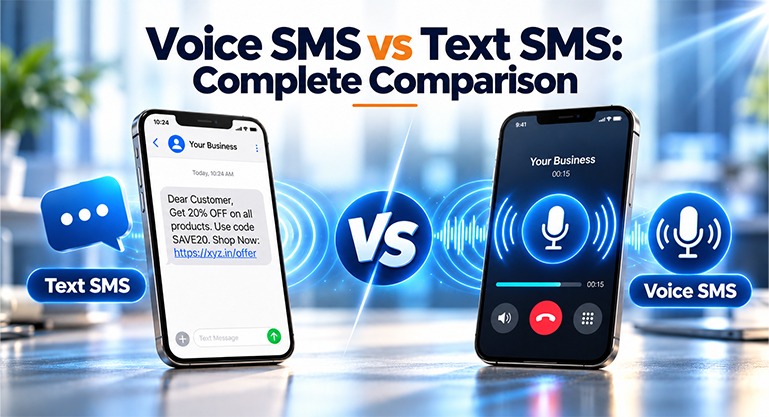
Businesses use Voice SMS and Text SMS for direct customer communication but each format suits different situations. Text SMS delivers written information while Voice SMS delivers a recorded message through a phone call.
The right option depends on the message, audience urgency and expected action.
What Is Text SMS?
Text SMS or Short Message Service sends a written message to a mobile phone. Businesses use it for OTPs payment alerts, order updates, appointment reminders, offers, links and service notifications.
TextSMS is useful when customers need information they can read, copy, save or check later.
What Is Voice SMS?
Voice SMS is an automated communication method that delivers a pre-recorded message through a phone call. After answering, the recipient hears the recorded information.
It is used for reminders, alerts, promotions, service updates and regional-language communication.
Voice SMS vs Text SMS: Key Differences
1. Communication Format
Text SMS uses written words. Voice SMS uses spoken words. Text suits codes, links, dates and short details while voice can help when instructions or spoken explanation matter.
2. Customer Attention
An SMS may be delivered without being read immediately. Voice SMS creates an incoming call which can attract more direct attention although recipients can still miss or reject calls.
3. Message Length
SMS is suited to concise information. Voice SMS allows businesses to explain more through speech, although recordings should remain short and focused.
4. Language and Accessibility
Text SMS requires reading. Voice SMS can be recorded in regional languages and may suit audiences who are more comfortable listening than reading.
5. Cost and Scalability
Text SMS is generally economical for high-volume short notifications. Voice SMS involves an outbound call for each recipient so campaign cost and calling capacity need consideration.
6. Response and Action
Text SMS works well for links, codes addresses and written details. Voice SMS can suit spoken instructions, reminders announcements and follow-ups.
When Should a Business Use Text SMS?
Text SMS is suitable when information needs to be read or stored.
Common uses include OTPs, payment alerts, order update appointment confirmations, promotional offers, links service notifications and event reminders.
When Should a Business Use Voice SMS?
Voice SMS can be considered when a message needs attention, explanation or spoken communication. Common uses include urgent alerts, appointment reminders, payment follow-ups, product announcements, event invitations, regional-language campaigns, feedback requests and lead follow-ups.
A voice message should identify the business state, the purpose of giving the key information and include one clear action.
Use Case 1: Healthcare Appointment Reminders
A clinic can send Text SMS with the appointment date, time, doctor name and location. This gives the patient a written reference.
A Voice SMS reminder can be sent before the appointment to repeat the key details and ask the customer to contact the clinic if changes are needed.
Text provides the reference while voice adds the reminder.
Use Case 2: Retail and Local Promotions
A retailer can send Text SMS containing an offer, validity period, store address and website link.
Voice SMS can support the same campaign with a short spoken announcement, especially when the business serves customers who prefer regional-language communication.
Both channels can be used together.
Case Study 1: Illustrative Appointment Reminder Campaign
A diagnostic centre notices that some customers miss written reminders. It adds a short Voice SMS reminder one day before appointments while keeping Text SMS for the written date, time and location.
SMS provides the record while voice reinforces the reminder.
Case Study 2: Illustrative Regional Retail Campaign
A retail chain wants to announce a limited-period offer across cities with different language preferences. It sends Text SMS with offer details and links, then uses short regional-language Voice SMS recordings.
Text provides exact information, while voice offers another way to understand the announcement.
Why Combine Voice SMS and Text SMS?
Businesses can use both channels for different stages of the same communication. For example, Text SMS can provide appointment details, payment links or event addresses, while Voice SMS can reinforce the information through reminders or spoken instructions.
Best Practices for SMS Campaigns
For Text SMS, keep messages concise, identify the business, place key information early, use one clear action and follow applicable messaging rules.
For Voice SMS, keep recordings short, use a clear voice, choose suitable languages and state the action clearly.
Choosing Between Voice SMS and Text SMS
Start with the purpose of the communication.
Choose Text SMS when customers need a code, link, written detail, confirmation or information they may need to save.
Consider Voice SMS when the message is urgent instruction-based, language-sensitive or benefits from spoken communication.
TextSMS can support both approaches allowing businesses to select the communication format according to the message.
FAQs
Voice SMS is automated. A pre-recorded message is played when the recipient answers so employees do not need to call every customer individually.
Yes. Text SMS is commonly used for OTPs because customers need to read and enter a specific code. The message also remains available as written information.
Yes. Businesses can create recordings in languages suited to their target audience, which can help regional campaigns communicate clearly.
Yes. Text SMS can provide written details while Voice SMS can deliver reminders, announcements and follow-ups.
Consider the message objective. If customers need to read, save, copy or click something, Text SMS may fit the task. If the message needs to be heard or reinforced through voice Voice SMS may be suitable.