Business communication has changed significantly in recent years. Customers expect quick responses, useful updates & convenient ways to connect with a company. A delayed message or missed customer inquiry can easily turn into a lost business opportunity.
Text SMS helps businesses simplify customer communication through practical messaging solutions designed for different business requirements.
Why Business Communication Solutions Matter
Communication is involved in almost every stage of the customer journey. A business may need to send an OTP during registration, confirm an order, remind customers about appointments, or promote a new offer.
A strong communication system helps businesses:
- Respond to customers faster
- Send important information instantly
- Improve customer engagement
- Automate repetitive communication
- Increase sales opportunities
- Reduce missed appointments and follow-ups
- Build stronger customer relationships
The key is choosing communication channels according to the purpose of the message.
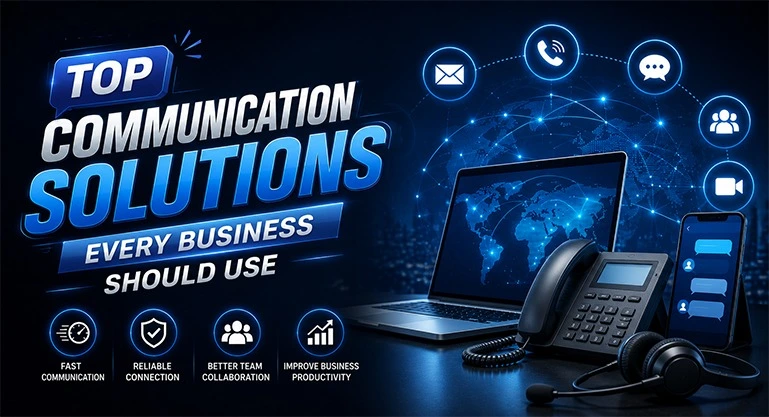
Top Communication Solutions Every Business Should Use
1. Bulk SMS
Bulk SMS remains one of the simplest ways to communicate with a large customer base. Businesses can send promotional campaigns, service updates, reminders & important announcements directly to mobile phones.
SMS does not require customers to install a separate application, making it useful for reaching a broad audience.
Common applications include:
- Promotional offers
- New product announcements
- Payment reminders
- Event invitations
- Customer alerts
- Service notifications
2. Transactional SMS
Transactional SMS is designed for essential customer communication. These messages are generally triggered by a specific customer action or business transaction.
Examples include order confirmations, booking updates, delivery notifications & account-related alerts.
Automating these messages can make the customer experience more reliable because information reaches the customer without requiring manual intervention.
3. OTP SMS
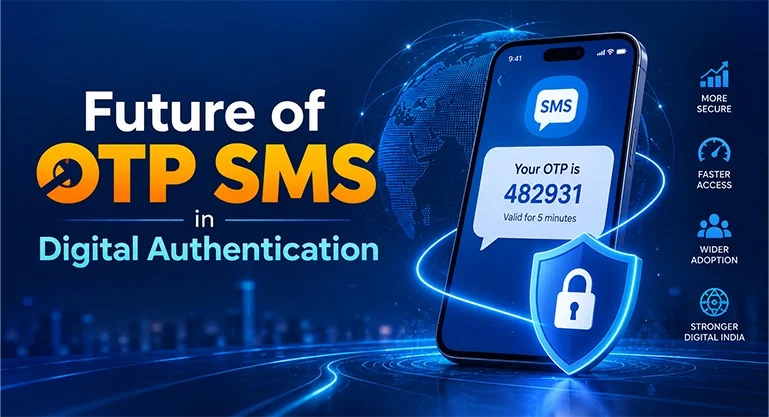
One-time passwords are an important part of secure digital communication. Businesses use OTP SMS for login verification, registration, password recovery & transaction authentication.
A dependable OTP system should deliver messages quickly because delays can interrupt the customer's journey.
4. WhatsApp Business Communication
WhatsApp has become an important customer communication channel for businesses. Companies can use WhatsApp to answer queries, share product information, provide updates & support customers.
Businesses can also use automated WhatsApp communication for:
- Order tracking
- Appointment reminders
- Customer support
- Payment notifications
- Lead follow-ups
- Product enquiries
5. Voice SMS
Some messages are better communicated through voice. Voice SMS allows businesses to deliver recorded or automated voice messages to customers.
It can be particularly useful when customers may not read text messages or when the information needs a more direct format.
Banks, educational institutions, healthcare providers & service businesses can use voice communication for reminders and important announcements.
6. RCS Messaging
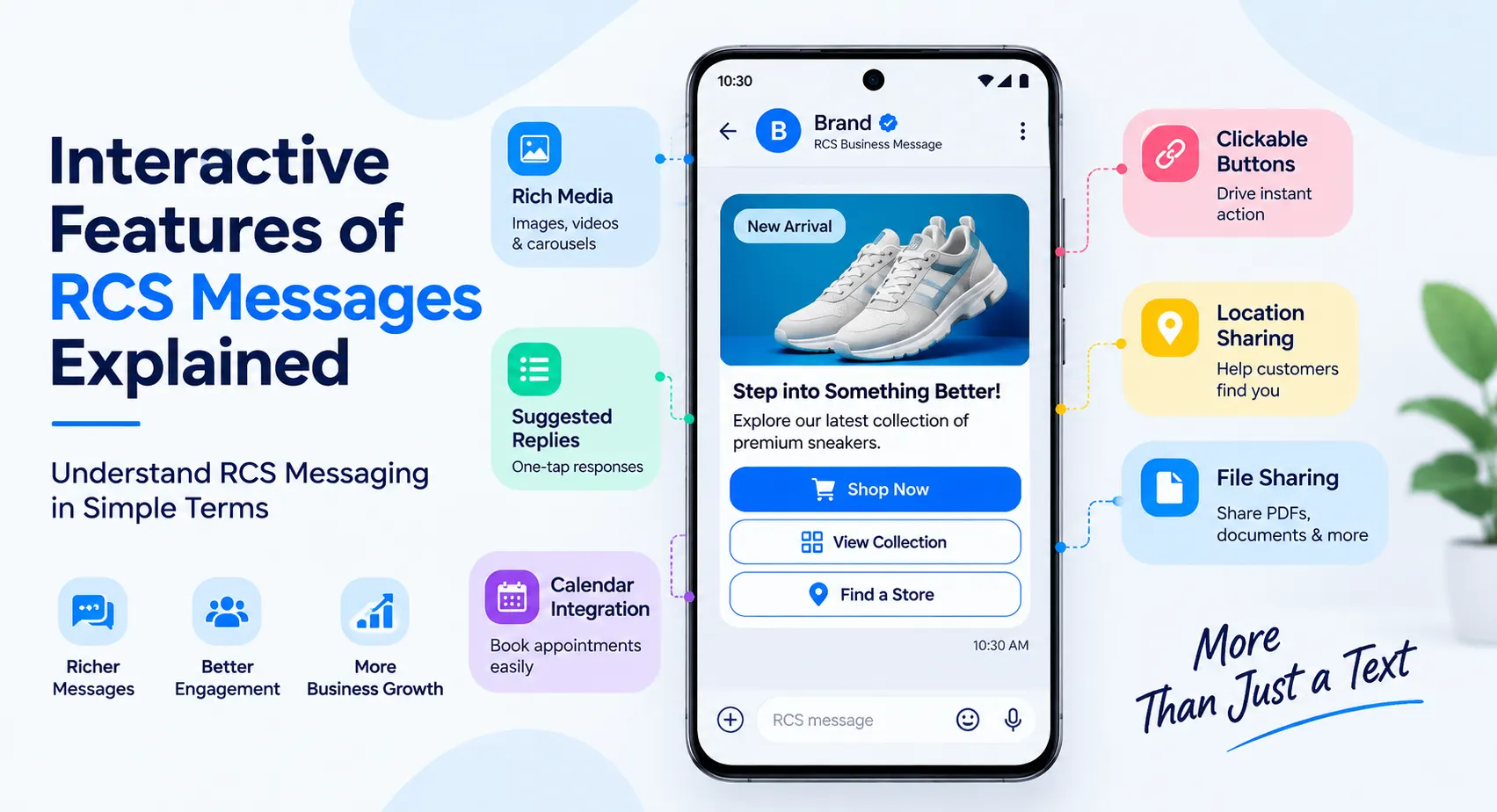
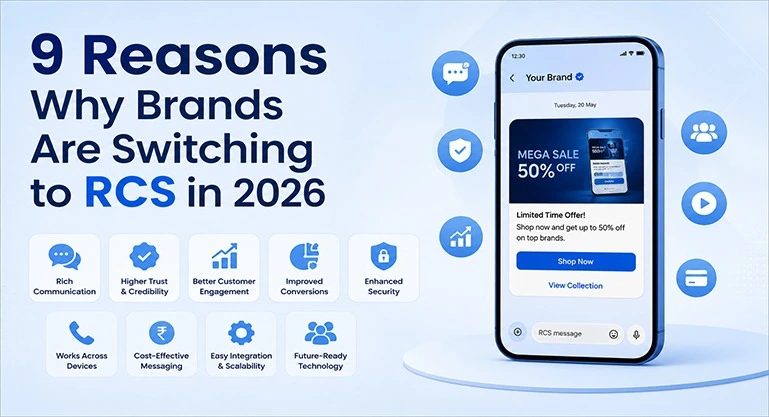
Rich Communication Services, commonly known as RCS, adds interactive features to mobile messaging. Depending on device and carrier support, businesses can use richer content such as images, buttons & interactive elements.
This can make customer communication more engaging than traditional text-only messaging.
How to Choose the Right Communication Solution
Businesses should select communication channels based on their audience, message type & objective.
Consider:
- Message urgency: OTPs and alerts need rapid delivery.
- Audience preference: Customers may prefer WhatsApp for conversations.
- Message volume: Bulk SMS is suitable for large-scale campaigns.
- Communication purpose: Promotional and transactional messages require different approaches.
- Automation needs: Repetitive messages can be connected with business systems.
Using several channels together can create a more consistent communication experience.
Use Case 1: E-commerce Order Communication
An online store can use multiple communication channels throughout the purchasing process.
After an order is placed, the business can send a confirmation SMS. When the product is dispatched, another notification can be sent. WhatsApp can then provide delivery updates or customer support.
This reduces uncertainty and gives customers timely information without requiring them to contact the company repeatedly.
Use Case 2: Appointment-Based Businesses
Clinics, salons, consultants, repair companies & other appointment-based businesses frequently lose time because of missed appointments.
A business can send an SMS when an appointment is booked, followed by a reminder before the scheduled time. WhatsApp can be used when the customer needs to confirm or reschedule.
This simple communication flow can reduce missed appointments and improve daily operations.
Case Study 1: Retail Business Improving Customer Engagement
A retail business with a large customer database wanted to communicate promotional offers without depending entirely on social media.
The company introduced targeted SMS campaigns for different customer groups. Instead of sending every offer to everyone, messages were planned around customer interests and purchasing behaviour.
The business was able to communicate offers directly with customers and create a more organised promotional process.
The key lesson was simple: relevant communication is more useful than sending more messages.
Case Study 2: Service Company Automating Customer Updates
A service-based company was handling appointment confirmations and reminders manually. Staff members spent considerable time calling customers and following up.
The company introduced automated SMS notifications connected to its booking process. Customers received confirmation and reminder messages automatically.
This reduced repetitive work for employees and helped create a more consistent customer experience.
The case demonstrates how communication automation can support both customer service and internal productivity.
Best Practices for Business Communication
Effective communication requires more than selecting the right technology. Businesses also need to pay attention to how messages are written and delivered.
Follow these practices:
- Keep messages clear and concise.
- Personalise communication when appropriate.
- Send messages at suitable times.
- Avoid unnecessary messages.
- Use clear calls to action.
- Separate promotional and transactional communication.
- Monitor delivery and engagement metrics.
- Keep customer data secure.
- Make opt-out and consent practices clear where applicable.
A well-planned communication strategy should make life easier for both the business and its customers.
The Role of Automation in Business Communication
Automation allows businesses to send the right message based on a customer's action or business event.
For example, a customer who registers on a website can automatically receive an OTP. After completing a purchase, the customer can receive an order confirmation. A few days later, the business can send a relevant follow-up message.
This creates a structured communication journey while reducing manual work.
Frequently Asked Questions
There is no single solution for every business. SMS, WhatsApp, voice messaging, OTP & RCS can serve different purposes. The right choice depends on the audience and communication objective.
SMS is fast, direct & does not require an internet-based messaging application. It can be used for alerts, reminders, OTPs, promotions & transactional updates.
Yes. Text SMS can be used for different business messaging requirements, including bulk messaging, transactional communication, OTPs & customer notifications.
Yes. WhatsApp can make customer support more convenient by allowing businesses to communicate through a familiar messaging channel and automate suitable customer interactions.
Promotional SMS is generally used for marketing communication, such as offers and campaigns. Transactional SMS is used to provide important information connected with a customer's activity or transaction.