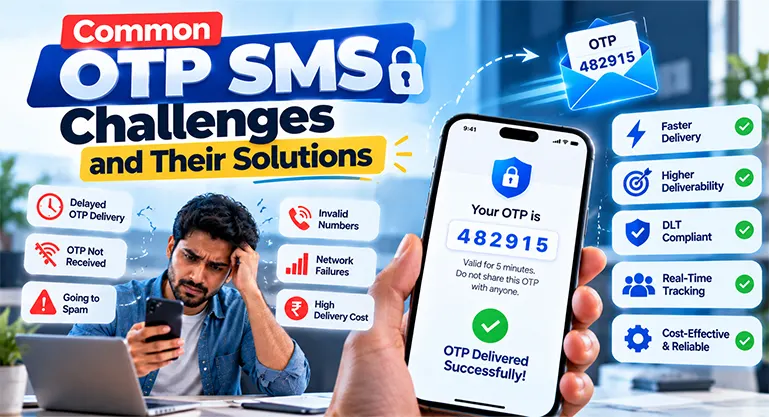
A customer is trying to log in, complete a payment, or create an account. Everything goes smoothly until the one-time password (OTP) takes too long to arrive. The customer waits, requests another code and may eventually leave without completing the process.
This small delay can create problems for businesses that depend on mobile verification. OTP SMS is often the final step between a customer and an important action, so timely delivery plays a major role in the overall user experience.
For businesses using SMS-based authentication, Text SMS a OTP SMS service provider in India highlights the importance of reliable messaging, efficient delivery and secure verification processes. Understanding what affects OTP delivery can help organisations reduce unnecessary delays and make digital services easier to use.
What Is OTP SMS Delivery?
OTP SMS delivery is the process of sending a temporary verification code to a user's registered mobile number through the SMS network. The code is used to confirm a phone number, verify a login attempt, approve an action, or complete another authentication step.
Unlike promotional messages, OTP messages are time-sensitive. A user may only have a limited period to enter the code before it expires.
Common uses of OTP SMS include:
- Logging in to websites and mobile applications.
- Registering a new account.
- Verifying a mobile number.
- Confirming online transactions.
- Resetting account passwords.
- Authenticating customer actions.
Fast delivery helps users complete these activities without unnecessary waiting. However, speed must work alongside security, accurate routing and dependable delivery reporting.
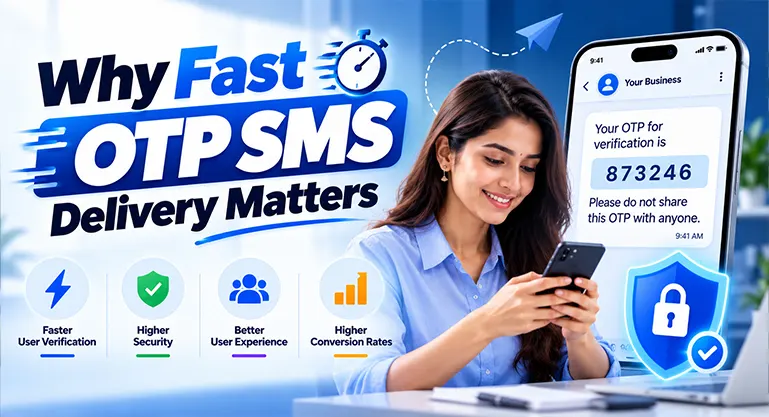
Why Fast OTP SMS Delivery Matters for Businesses
1. Reduces Login and Registration Friction
Users expect account verification to be straightforward. When an OTP arrives promptly, they can enter the code and continue without interrupting their activity.
Slow delivery can lead to repeated requests, confusion about which code is valid and abandoned registration attempts. This is especially important for businesses that rely on mobile apps, online portals, or digital onboarding.
A dependable OTP SMS system helps make account access smoother and reduces avoidable obstacles during registration.
2. Improves Customer Experience
Waiting for a verification code can be frustrating, particularly when someone needs to complete an urgent task. Customers may become concerned that the website is not working or that their mobile number has been entered incorrectly.
Fast and consistent delivery makes the verification process feel more reliable. Clear messages explaining the code's validity period and what to do if it does not arrive can improve the experience further.
Text SMS can be considered by businesses looking to strengthen their SMS communication processes and understand their delivery requirements.
3. Helps Reduce Transaction Abandonment
Online payments often require an additional verification step. If an OTP arrives after the customer has left the checkout page or the session has expired, the transaction may not be completed.
Delays can affect e-commerce purchases, bill payments, digital service subscriptions and other online transactions.
A reliable OTP delivery process helps customers complete verification while the transaction is still active. Businesses should also review checkout design, payment gateway performance and authentication settings because SMS delivery is only one part of the process.
4. Supports Account Security
OTP verification adds a layer of protection by requiring access to a registered communication channel. It can help confirm that a person has access to the phone number associated with an account.
Timely delivery allows legitimate users to complete verification within the intended period. However, fast delivery alone does not make authentication secure.
Businesses should use short code validity periods, rate limits, resend controls and appropriate fraud monitoring. OTPs should never be shared with another person and SMS-based verification should be strengthened with other security measures where necessary.
5. Improves Operational Efficiency
When OTP messages arrive late, customers often request multiple codes or contact customer support. This can increase messaging costs and create additional work for support teams.
Reliable delivery can help reduce repeated requests and unnecessary complaints. Businesses can improve efficiency by monitoring delivery reports, reviewing failed messages and identifying recurring network or integration issues.
A well-managed SMS system also helps technical teams distinguish between application errors, provider delays and problems involving a recipient's mobile network.
6. Builds Trust in Digital Services
Customers may question the reliability of a platform if verification repeatedly fails. This can affect their willingness to use the service again, especially when authentication is required for every login or transaction.
Consistent OTP delivery helps establish confidence in the verification process. Businesses should aim for predictable delivery, clear error messages and a practical alternative when SMS verification is temporarily unavailable.
Trust develops through repeated successful experiences, so delivery performance should be monitored continuously.
What Affects OTP SMS Delivery Speed?
1. SMS Routing and Network Conditions
An OTP message passes through messaging infrastructure before reaching the recipient's mobile device. The route used, network congestion and mobile operator conditions can affect delivery time.
Efficient routing and suitable provider connections can help reduce avoidable delays. Businesses should review provider performance across the mobile networks and regions relevant to their customers.
2. SMS Gateway Performance
The SMS gateway receives the message request from a business application and forwards it into the messaging network. Slow processing, system outages, or integration problems can delay the initial submission.
Businesses should choose a provider that offers suitable infrastructure, delivery reporting and support for troubleshooting.
3. Incorrect Mobile Numbers
A mistyped or outdated phone number can prevent successful delivery. Invalid numbers and inactive SIM cards may result in failed messages or repeated attempts.
Mobile number validation during registration can help prevent these problems. Businesses should also provide a simple way for users to correct their contact details.
4. Message Content and Compliance
OTP messages should be concise and clearly identify the purpose of the code. Incorrect configuration, rejected traffic, or missing compliance requirements can interfere with delivery.
In India, businesses should follow applicable telecom regulations and requirements, including relevant DLT rules for covered messaging traffic. Sender configuration and message templates should be reviewed before launching an OTP service.
5. Application and API Performance
An OTP request may begin inside a website or application before reaching the SMS provider. Slow server responses, API timeouts and poorly configured retry logic can introduce delays before the message is even submitted.
Technical teams should monitor request processing time, API response codes and message submission status to identify problems early.
Best Practices for Faster OTP SMS Delivery
Businesses can improve OTP performance by reviewing their complete verification workflow.
- Choose a suitable SMS provider: Evaluate routing quality, service reliability, reporting and support.
- Monitor delivery reports: Track submission, delivery, failure and latency patterns.
- Set sensible expiry periods: Give users enough time to enter a code while limiting the risk of misuse.
- Control resend requests: Apply cooldown periods and rate limits to prevent excessive requests.
- Avoid duplicate active codes: Design the system so users understand which code remains valid.
- Optimise API integration: Use suitable timeouts, error handling and secure retry logic.
- Prepare fallback options: Consider alternative authentication methods where appropriate.
- Test across networks: Check delivery performance for representative operators, devices and locations.
These practices help businesses identify weak points and improve reliability without compromising security.
How Text SMS Supports Reliable OTP Communication
Text SMS focuses on business messaging solutions, including OTP SMS, bulk messaging, RCS messaging and SMS API services. For organisations that depend on verification messages, selecting an appropriate messaging setup is an important part of maintaining a reliable customer journey.
Businesses evaluating Text SMS or another provider should review the capabilities that matter to their operations, including:
- OTP SMS API integration with websites and applications.
- Delivery status reports and error information.
- Support for relevant sender and template requirements.
- Performance monitoring across target markets.
- Technical assistance for integration and troubleshooting.
- Suitable messaging capacity for expected traffic.
Before choosing a service, confirm current product capabilities, pricing, network coverage and any service-level commitments directly with the provider.
Practical Use Cases of Fast OTP SMS Delivery
Use Case 1: OTP Verification During Online Shopping
An e-commerce customer adds products to a cart and proceeds to checkout. The platform requires mobile verification before completing the order.
If the OTP arrives promptly, the customer can finish the verification step and return to the payment process. If delivery is delayed, the customer may request multiple codes or abandon the purchase.
The business can monitor OTP delivery time, verification completion rate and checkout abandonment to determine whether messaging performance is affecting sales.
Use Case 2: Secure Login for a Financial Service
A financial service platform sends an OTP when a customer attempts to access a protected account or perform an eligible action.
The platform needs timely message delivery, suitable code expiry and controls against repeated requests. It should also monitor unusual login behaviour and offer an appropriate recovery process when a message cannot be delivered.
This approach supports a smoother authentication experience while keeping security controls in place. OTP SMS should be used as part of a wider security strategy, not as the sole defence against account fraud.
Case Studies of OTP SMS Delivery in Practice
Case Study 1: Reducing Verification Drop-Off for an E-commerce Platform
Challenge: An online store notices that some customers leave during mobile verification. The team suspects that delayed OTPs and repeated code requests are contributing to the problem.
Action: The business reviews its SMS gateway logs, API response times, delivery reports and resend behaviour. It works with its messaging provider to investigate routing issues and improves the verification screen with clearer instructions.
Measurement: The team compares OTP delivery latency, successful verification rates, repeat requests and checkout completion before and after the changes.
Expected benefit: Identifying delays and improving the verification workflow may help more customers complete their orders.
This is an illustrative case study. The actual impact would depend on the causes of the delays and the results of the changes.
Case Study 2: Improving OTP Reliability for a Customer Portal
Challenge: A service company receives repeated complaints from customers who cannot access their accounts because verification codes arrive late or fail to arrive.
Action: The technical team reviews provider reports, validates mobile number handling, checks API timeouts and introduces sensible resend controls. It also establishes a process for investigating repeated failures.
Measurement: The company tracks delivery success, message latency, support complaints and successful logins across different mobile networks.
Expected benefit: Better visibility into delivery problems can help the company resolve issues more quickly and provide a more dependable login experience.
This scenario is illustrative and does not represent measured results from an identified customer.
FAQs About Fast OTP SMS Delivery
It helps users complete logins, registrations and transactions without unnecessary waiting.
Ideally, within seconds. Actual delivery time depends on the provider, routing, mobile network and device conditions.
Common causes include network congestion, routing issues, API problems, incorrect numbers and configuration errors.
Contact Text SMS to confirm its current OTP SMS services, API features, delivery reporting and integration options.
No. Security also depends on code expiry, rate limits, fraud monitoring and appropriate authentication controls.