Businesses communicate with customers through SMS, email, WhatsApp and other digital channels. As customer expectations change, companies are looking for better ways to share information, promote products and provide customer support.
RCS (Rich Communication Services) is a messaging technology that brings interactive features to mobile messaging. It allows businesses to send messages with brand details, images, videos, buttons and other useful elements.
Unlike traditional SMS, which mainly supports plain text, RCS can create a more visual and interactive communication experience. Businesses can use it to share product information, send offers, provide updates and make customer interactions easier.
For companies that want to improve their messaging strategy, RCS offers new ways to communicate while keeping the brand visible throughout the customer journey.
What Is RCS Messaging?
RCS stands for Rich Communication Services. It is an advanced messaging standard designed to improve the traditional SMS experience.
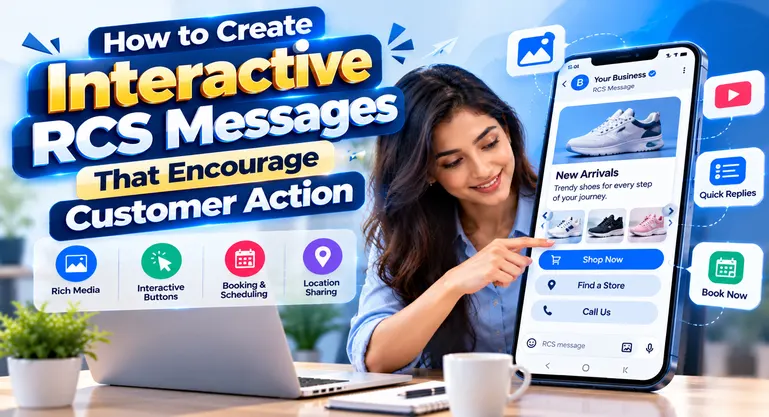
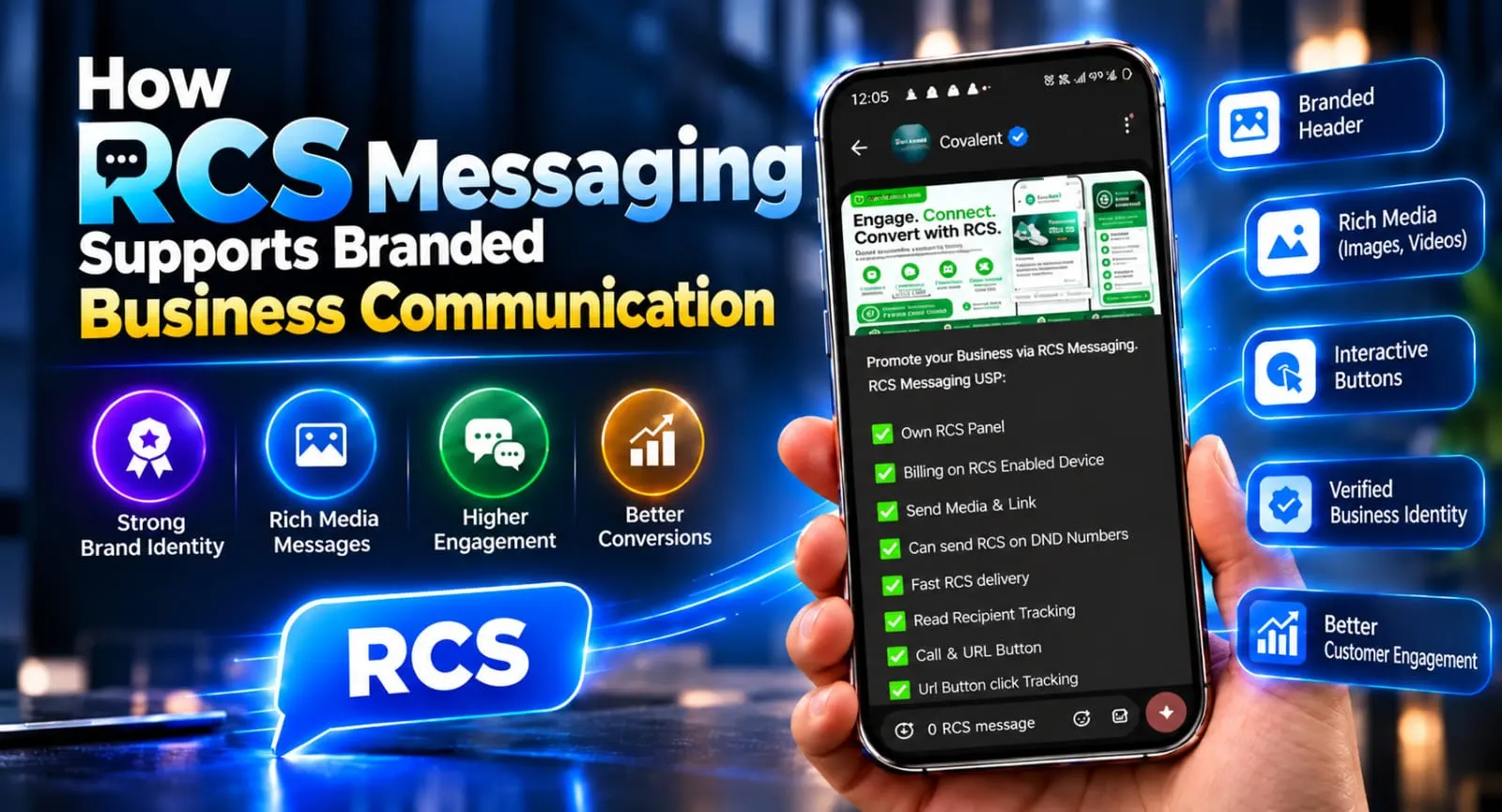
RCS messages can include rich media and interactive elements. Depending on device, network and service support, customers may see branded sender details, images, videos, suggested replies and action buttons.
For businesses, this creates an opportunity to send messages that contain more information and provide direct ways for customers to respond.
Some common RCS features include:
- Business name and branding.
- Brand logo and profile information.
- Rich images and video content.
- Interactive buttons.
- Suggested replies.
- Product cards and carousels.
- Delivery and read indicators where supported.
- Verified business identity where supported.
These features help businesses present their messages in a more organised and recognisable format.
What Is Branded Business Communication?
Branded business communication means using a consistent business identity across customer interactions.
It includes the business name, logo, colours, tone of communication and the information shared with customers.
For example, when a customer receives an order update, they should be able to recognise which company sent it. The message should also provide clear information about the order and any action the customer needs to take.
Consistent branding can help businesses build recognition and make communication easier to understand.
RCS supports this approach by allowing eligible businesses to display their brand identity within supported messaging experiences.
How RCS Messaging Supports Branded Business Communication
1. Displays Business Identity
Traditional SMS generally displays a sender ID or phone number, depending on the messaging setup and country regulations.
RCS can display a business profile with details such as the brand name and logo. Verified branding features may also be available through supported RCS business messaging services.
This helps customers recognise the sender and understand where the message is coming from.
2. Creates a Consistent Brand Experience
Businesses use different communication channels to reach customers. Maintaining a consistent brand identity across these channels is important.
RCS allows companies to use branded visual elements in their messages. The logo, business name, images and message content can follow the company's communication style.
This helps customers become familiar with the brand during repeated interactions.
3. Makes Promotional Messages More Visual
A plain-text promotional SMS has limited space for presenting products and offers.
RCS supports rich media, allowing businesses to include product images, promotional banners and other visual elements.
For example, a retail business can share a festive offer with product images, pricing information and a button directing customers to its website.
Visual content can make the offer easier to understand and explore.
4. Encourages Direct Customer Interaction
RCS supports interactive buttons and suggested replies. Businesses can use these features to give customers simple ways to respond.
For example, a service provider can send an appointment reminder with options such as:
- Confirm Appointment
- Reschedule
- Contact Support
Customers can select an available option without having to type a complete response.
The available interactions depend on the RCS implementation and device support.
5. Provides a Better Product Browsing Experience
Businesses can use RCS carousels and product cards to present multiple products in one conversation.
An online store, for example, can display product images, descriptions and links to product pages.
Customers can browse the available options and visit the website to learn more or complete a purchase.
This format can be useful for retail, fashion, electronics, travel and other industries that have multiple products or services to promote.
6. Supports Customer Trust and Recognition
Customers receive messages from many businesses. Recognising the sender is important, especially when messages contain payment updates, booking details, or account information.
RCS business messaging can support branded and verified sender experiences where available. This gives customers additional information about the business behind the message.
Businesses should still use clear message content, secure links and responsible communication practices. Branding alone does not guarantee that every message will be trusted.
7. Combines Information and Action in One Message
Traditional messages often ask customers to visit a website or contact customer support to complete an action.
RCS can bring useful information and interactive options into the same message.
For example, a delivery notification may include order details and a button to track the shipment. A bank notification may provide account information with an option to contact support through an approved channel.
This can reduce unnecessary steps in common customer interactions.
Practical Business Uses of RCS Messaging
1. Retail and E-commerce
Retailers can use RCS to share product launches, seasonal offers, discount announcements and order updates.
Product images and interactive buttons can help customers explore offers and visit relevant product pages.
2. Banking and Financial Services
Financial institutions can use RCS for service notifications, transaction updates, appointment reminders and customer support options.
Sensitive information should be handled carefully and businesses should follow applicable security and regulatory requirements.
3. Travel and Hospitality
Airlines, hotels and travel companies can share booking confirmations, itinerary details, check-in reminders and service updates.
Interactive options can help customers access relevant information or contact support.
4. Healthcare and Appointment Services
Hospitals and clinics can use RCS for appointment reminders, booking confirmations and general service updates.
Messages should protect personal information and follow applicable healthcare privacy requirements.
5. Education and Training Institutes
Educational institutions can share admission updates, course information, application reminders, event details and registration links.
Branded messages can help students and parents recognise official communication from the institution.
RCS Messaging vs Traditional SMS
Traditional SMS remains useful for short alerts, OTPs, reminders and notifications. It works across a wide range of mobile devices and does not require the same rich messaging support as RCS.
RCS offers additional features for businesses that want more visual and interactive communication.
The main differences include:
- Message format: SMS mainly supports text, while RCS can support rich media.
- Branding: SMS commonly uses a sender ID, while RCS can display a richer business profile.
- Interaction: SMS generally relies on text replies or links, while RCS can provide action buttons and suggested replies.
- Product presentation: SMS can share product links, while RCS can display images and product cards.
- Delivery experience: SMS has broad device support, while RCS availability depends on compatible devices, networks, regions and service configuration.
Businesses can use both channels as part of a communication strategy. SMS can remain useful for broad reach, while RCS can support richer experiences where available.
Use Cases of RCS Messaging for Businesses
Use Case 1: A Retail Brand Promotes a Festive Sale
A clothing retailer wants to inform customers about its festive collection and ongoing discounts.
The business sends an RCS message with its brand identity, a promotional banner, selected product images and a button to explore the collection.
Customers can view the featured products and visit the online store directly from the message.
This approach gives the retailer more space to present its offer and maintain a consistent brand experience.
Use Case 2: A Service Company Sends Appointment Reminders
A service company wants to reduce missed appointments and make it easier for customers to confirm bookings.
It sends branded RCS reminders with the appointment date, time, service details and options to confirm or reschedule.
Customers can respond through the available buttons, making the appointment process easier to manage.
Case Studies: How Businesses Can Apply RCS Messaging
The following case studies are illustrative examples. They are not verified customer projects or actual performance reports.
Case Study 1: An Online Store Improves Product Communication
The Challenge
An online store regularly sends promotional SMS messages to customers. However, plain-text messages provide limited space to showcase new products and seasonal collections.
The Approach
The store introduces RCS messaging for supported customers. Its messages include the business identity, product images, short descriptions and buttons linking to product pages.
The Expected Benefit
Customers receive a more visual product presentation. The store also gets an opportunity to maintain consistent branding across its promotional messages.
Case Study 2: A Travel Company Organises Booking Updates
The Challenge
A travel company sends booking confirmations and reminders through traditional SMS. Customers often need to open separate links or contact support to find additional information.
The Approach
The company uses RCS for supported booking communications. Messages include its business identity, booking details, travel reminders and relevant action buttons.
The Expected Benefit
Customers can access important information in a more organised message format. The company can also make common booking interactions easier to manage.
Important Things to Consider Before Using RCS
Before introducing RCS messaging, businesses should understand its technical and operational requirements.
Some important points include:
- Device compatibility: RCS availability depends on the customer's device and messaging application.
- Network support: Mobile operators and service providers must support RCS for the intended use.
- Fallback options: Businesses should consider SMS fallback for customers who cannot receive RCS messages.
- Brand verification: Branding and verification requirements depend on the RCS provider and supported market.
- Customer consent: Promotional messages should follow applicable consent and messaging regulations.
- Message quality: Content should be clear, relevant and useful.
- Performance tracking: Businesses should review available delivery, interaction and campaign reporting.
Planning these details can help businesses use RCS more effectively.
How Text SMS Helps Businesses Explore RCS Messaging
Text SMS provides business messaging solutions that help companies communicate with their customers through digital messaging channels.
Businesses exploring RCS can consider how rich messaging fits into their existing communication strategy. Depending on service availability and requirements, RCS can support branded promotional messages, customer notifications, product updates and interactive communication.
Text SMS also offers messaging-related services such as Bulk SMS, OTP SMS, SMS API and DLT solutions.
By selecting suitable messaging channels for different communication needs, businesses can organise customer updates, promotional campaigns and transactional notifications more effectively.
Whether a company needs to send a short SMS alert or explore richer branded communication, choosing the right messaging solution is an important part of its customer communication strategy.
Frequently Asked Questions
RCS is an advanced messaging service that allows businesses to send messages with branding, images, videos and interactive buttons on supported devices and networks.
RCS can display business names, logos and branded message content. This helps customers recognise the sender and maintain familiarity with the business.
Yes. RCS supports rich media, product cards, carousels, suggested replies and interactive buttons, depending on the service implementation.
RCS offers more visual and interactive features, while SMS provides wider device compatibility. Businesses can use both depending on their audience and communication needs.
No. RCS availability depends on device compatibility, messaging application support, mobile network availability and service configuration. SMS fallback can help reach customers who do not support RCS.